April 2026

Coming out as a Naturist


Why Naturists Hide — And Why Coming Out Matters More Than You Think

For a philosophy built on honesty, comfort, and body‑acceptance, naturists spend a surprising amount of time hiding. Not from nature, not from themselves, but from the world around them. And it’s not because naturism is shameful — it’s because the world has been taught to misunderstand it.

If you’ve ever felt the tension between living authentically and keeping your naturism private, you’re not alone. Many naturists wrestle with the same questions: Should I tell people? Will they judge me? Will it change how they see me?
Let’s unpack why this happens, what’s at stake, and why stepping into the open — even just a little — can be more powerful than you realise.


Why Naturists Hide

1. Misconceptions About Nudity

The biggest reason naturists stay quiet is simple: most people still equate nudity with sex.
Naturism challenges that assumption, but society has spent centuries reinforcing it. When people hear “I’m a naturist,” they often hear something entirely different — and naturists know it.

2. Fear of Social Judgment

Naturists aren’t afraid of their bodies. They’re afraid of being misunderstood.
Friends, colleagues, or family might jump to conclusions, make jokes, or treat them differently. Even mild reactions can feel discouraging.

3. Professional Consequences

Some naturists work in fields where reputation is everything — teaching, healthcare, public service, and leadership roles.
Even though naturism is legal and ethical, people worry that a single misinformed opinion could affect their career.

4. Cultural and Religious Conditioning

Many of us grew up hearing that the body is something to hide, control, or be ashamed of.
Naturism flips that script, but the old messages don’t disappear overnight. Hiding often feels safer than challenging deeply rooted norms.

5. Protecting Peace

Sometimes, staying quiet isn’t about fear — it’s about avoiding unnecessary drama.
Naturists often choose privacy simply because they don’t want to spend their lives explaining themselves.


The Pros of Coming Out as a Naturist

1. Living Authentically

There’s a real freedom in saying, “This is who I am.”
No more dodging questions, hiding photos, or pretending your weekends at the beach were “just hiking.”

2. Reducing Shame — For Yourself and Others

When you speak openly about naturism, you help dismantle the shame culture around bodies.
You become a quiet, powerful example that nudity can be normal, healthy, and non‑sexual.

3. Building Community

Coming out often leads to unexpected connections.
People you never suspected — neighbours, coworkers, friends — may reveal that they’re naturists too, or at least curious and supportive.

4. Advocacy Through Visibility

Every naturist who speaks openly helps shift public perception.
Visibility normalises. Silence preserves stigma.

5. Emotional Relief

Hiding any part of your identity takes energy.
Coming out can feel like dropping a weight you didn’t realise you were carrying.

6. Being Counted

This is the part many naturists underestimate.
When you come out — even to one person — you add to the real, visible number of ordinary people who live this way.
Every naturist who steps forward makes it easier for the next one.
Movements grow because people choose to be seen.


The Cons of Coming Out as a Naturist

1. Misunderstanding and Stereotypes

Even well‑meaning people may not “get it” at first.
You might have to explain, clarify, and correct assumptions more than you’d like.

2. Social Awkwardness

Some people may joke, tease, or act uncomfortable.
It’s rarely malicious — but it can be tiring.

3. Professional Risks

While naturism is legal, not everyone reacts rationally.
A colleague’s raised eyebrow or a manager’s discomfort can create subtle tension.

4. Family Dynamics

Family members may project their own insecurities or beliefs onto your lifestyle.
Sometimes the hardest conversations aren’t with strangers — they’re with the people closest to you.

5. Loss of Privacy

Once you’re open, you can’t fully “un‑open” the door.
People may ask questions, make assumptions, or bring it up unexpectedly.


So… Should You Come Out?

There’s no universal answer.
Naturism is about freedom, not pressure — and that includes the freedom to share or stay private.

But here’s the truth that many naturists quietly discover:

If you wait for the world to be ready, you’ll wait forever.
If you wait for yourself to be ready, you might wait just as long.

Sometimes the moment to step forward isn’t when everything feels safe — it’s when you realise you’re tired of shrinking.

Coming out doesn’t have to be dramatic.
It can be a single conversation.
A casual mention.
A small truth shared with someone you trust.

And each time a naturist chooses visibility, the world becomes a little more honest, a little more open, and a little less afraid of the human body.


Final Thought: Be Counted, Even Quietly

Naturists hide not because naturism is shameful, but because society hasn’t caught up yet.
But society won’t catch up unless naturists exist in the open — not all at once, not loudly, but steadily.

You don’t have to shout it from the rooftops.
You don’t have to post it online.
You don’t have to tell everyone.

But telling someone — being counted, even in a small way — is how change begins.

Your naturism is valid.
Your voice matters.
And the world needs more people who live comfortably in their own skin.
Here is a great article on a similar topic
Nude man standing by a large window in a bright room.

Natural Erection

Erections: A Natural Body Response, Not Always a Sexual One

For many people, the topic of erections comes wrapped in embarrassment, jokes, or assumptions about desire. But the truth is far simpler: an erection is a normal physiological reaction, and it doesn’t always have anything to do with sexual thoughts or intentions.

Erections can happen for many reasons—changes in temperature, physical movement, relaxation, stress release, or even just the body’s internal rhythms. The nervous system and circulatory system are constantly adjusting, and sometimes that results in increased blood flow to the penis. It’s a sign that the body is functioning as it should.

In everyday life, this can feel awkward because society tends to treat any visible sexual anatomy as inherently sexual. But in reality, the body doesn’t follow those cultural rules. It responds to biology, not social expectations.

In naturist spaces, this understanding becomes especially important. Naturism encourages people to see the body as it is—without shame, without assumptions, and without attaching meaning to every natural response. An erection in a non‑sexual context isn’t a statement or an invitation; it’s simply a momentary physical state. Most naturist communities treat it with calm practicality: take a breath, shift your posture, or give your body a moment to settle. No drama, no judgement.

Normalising this perspective helps reduce anxiety and promotes healthier body awareness. When we stop treating natural functions as taboo, we make room for comfort, confidence, and respect—both for ourselves and for others.

Erections are part of being human. They don’t always signal desire, and they don’t need to be a source of shame. Understanding that truth is a step toward a more relaxed, honest relationship with our own bodies.

Many male naturists worry about their first time visiting a naturist beach or club, and their main concern is “What if I get an erection?”
Well, the answer is, you probably won’t because of nerves on the day, and if you do, it doesn’t really matter.
Just be aware of the people around you and cover up or hide it if you think it necessary.
As long as you are not intentionally waving it at people, you should be ok

I never get fully erect in a naturist setting, but sometimes penises have a mind of their own, and that is totally natural.
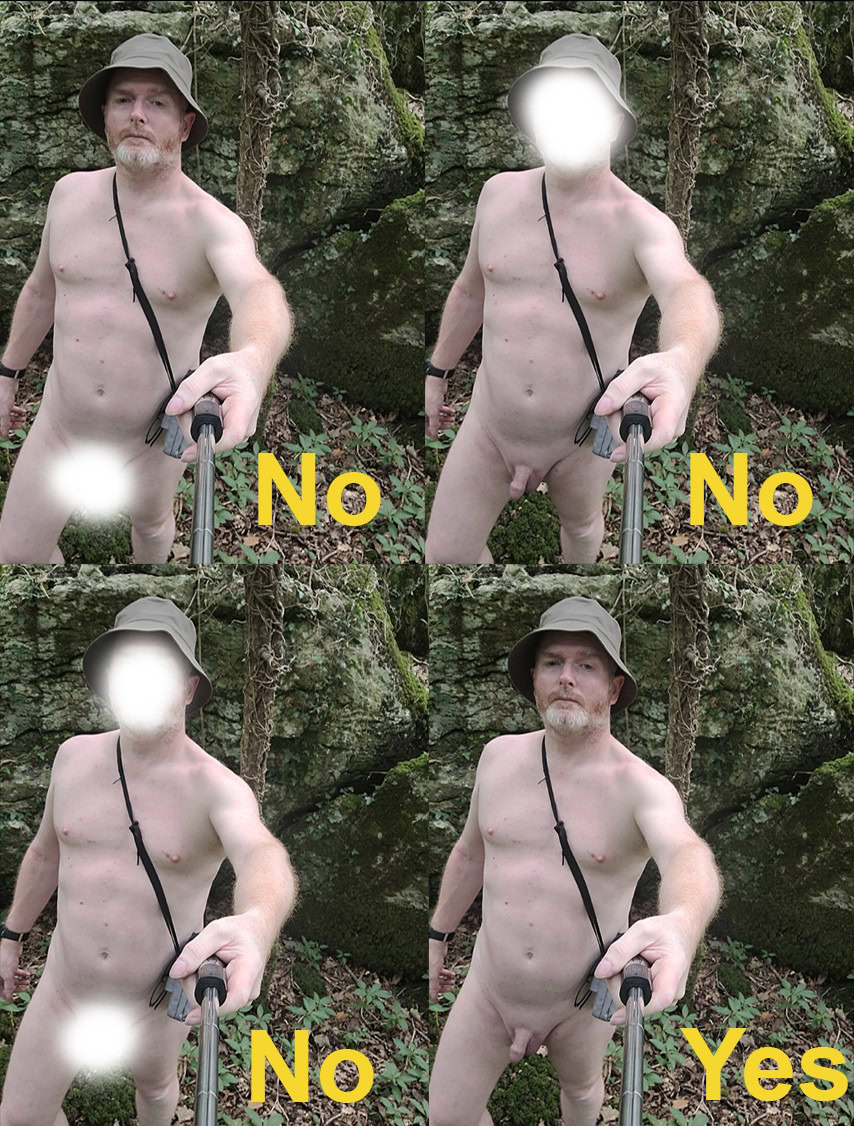
When I’m taking photos or recording videos of myself, I am aware that I am naked and that people will see every bit of me, and some excitement is present, but it’s not sexual excitement. It is excitement about being seen as I am… as a whole person
An erection isn’t always sexual

And Remember Penis Size means nothing

Clothing Optional

🌞 Why Humans Wear Clothing When No Other Animals Do

…and why naturism helps us remember what the body was never meant to forget

Spend a moment watching the natural world and you’ll notice something quietly profound. Every animal—every bird, every mammal, every creature that walks, swims, or soars—moves through life in the body it was born with. No shame. No strategic covering. No “Oops, I forgot my trousers.”

Just being.

Humans, though? We’re the outliers. We’re the only species that routinely hides itself under layers of fabric, rules, and meaning. We’re the only ones who treat the body as something that must be managed, edited, or justified.

Naturism doesn’t just question that—it gently exposes how strange it is.

Because if no other animal needs clothing to be acceptable, dignified, or “appropriate,” why do we?

Let’s take the long, honest walk through that question.


🌍 1. Clothing Began as Survival, Not Modesty

The earliest humans didn’t cover up because they were embarrassed. They covered up because they were cold.

As our ancestors migrated into harsher climates, they needed protection:

  • against freezing winds
  • against scorching sun
  • against rough terrain
  • against insects and thorns

Clothing was a tool—no different from fire, shelter, or stone blades. It was practical, functional, and entirely free of moral weight.

Naturism remembers this. It treats clothing as equipment, not identity. A jacket is no more a statement about your worth than a pair of shoes is a commentary on your soul.


🧠 2. Then Clothing Became a Social Language

Humans are storytellers. We love symbols. We love signalling who we are, what we value, and where we belong.

Clothing became a shortcut for all of that:

  • tribe
  • status
  • profession
  • wealth
  • gender roles
  • religious identity
  • cultural belonging

But here’s the key: none of this has anything to do with the body itself. It’s all external meaning layered onto a neutral, natural form.

Naturism steps outside that symbolic system. It says, “Let’s meet each other without the costumes.” And that’s why naturist spaces feel so startlingly equal—because the usual visual hierarchies evaporate.

Without clothing, you can’t instantly sort people into categories. You meet the person, not the performance.


🙈 3. Eventually, Clothing Became a Moral Cage

This is where things took a turn.

At some point, societies began treating the body—especially certain parts of it—as dangerous, shameful, or morally loaded. Not because of biology, but because of belief.

Cultures invented:

  • modesty rules
  • “forbidden” skin
  • dress codes
  • purity standards
  • sexual panic over anatomy
  • the idea that nudity equals indecency

And then we forgot we invented them.

We started teaching children that their bodies were embarrassing. We built entire legal systems around hiding skin. We acted as though the human body was a threat that needed constant containment.

No other animal lives under that burden.

Naturism challenges this cultural amnesia. It doesn’t reject clothing—it rejects the idea that the body is a problem.


🌱 4. Naturism Is the Reset Button We Didn’t Know We Needed

Naturism isn’t about nudity for nudity’s sake. It’s about clarity. It’s about remembering what the body is when you strip away centuries of fear and symbolism.

Naturism says:

  • The body is normal.
  • Nudity is neutral.
  • Shame is learned.
  • Confidence grows when you stop hiding.
  • Community deepens when everyone shows up as they are.
  • Equality flourishes when status symbols disappear.
  • Sexuality becomes healthier when the body isn’t taboo.

Naturism doesn’t ask humans to behave like animals. It asks humans to stop pretending they’re the only species whose bodies require constant censorship.

It’s not regression—it’s restoration.


🌿 5. The Body Was Never the Problem

One of the most liberating truths naturism offers is this:

The human body has never been the issue. The stories we attach to it are.

We inherited centuries of cultural baggage:

  • the idea that nudity is inherently sexual
  • the belief that certain body parts are “dirty”
  • the fear that seeing a body will corrupt someone
  • the assumption that modesty equals morality

Naturism gently dismantles these myths by doing something radical in its simplicity: it treats the body as a body.

Not a scandal.
Not a symbol.
Not a threat.
Not a temptation.
Not a moral test.

Just a body.

And when you see bodies treated that way—your own and others’—something shifts. Something heals. Something returns to its natural state.


🌞 6. So Why Do Humans Wear Clothing?

Because we’re clever.
Because we’re expressive.
Because we’re social.
Because we’re anxious.
Because we’re symbolic.
Because we’re complicated.

But naturism reminds us of something deeper:

Clothing is optional. Humanity is not.

We’re the only species that covers itself—but we’re also the only species capable of consciously choosing when not to. And that choice can be grounding, liberating, and profoundly human.

Naturism doesn’t reject clothing. It rejects the idea that we must hide to be acceptable.

It invites us back into our own skin.

It reminds us that the body is not the enemy.

It reconnects us with the simplest truth in the natural world:

We were born unclothed. We were not born ashamed.